
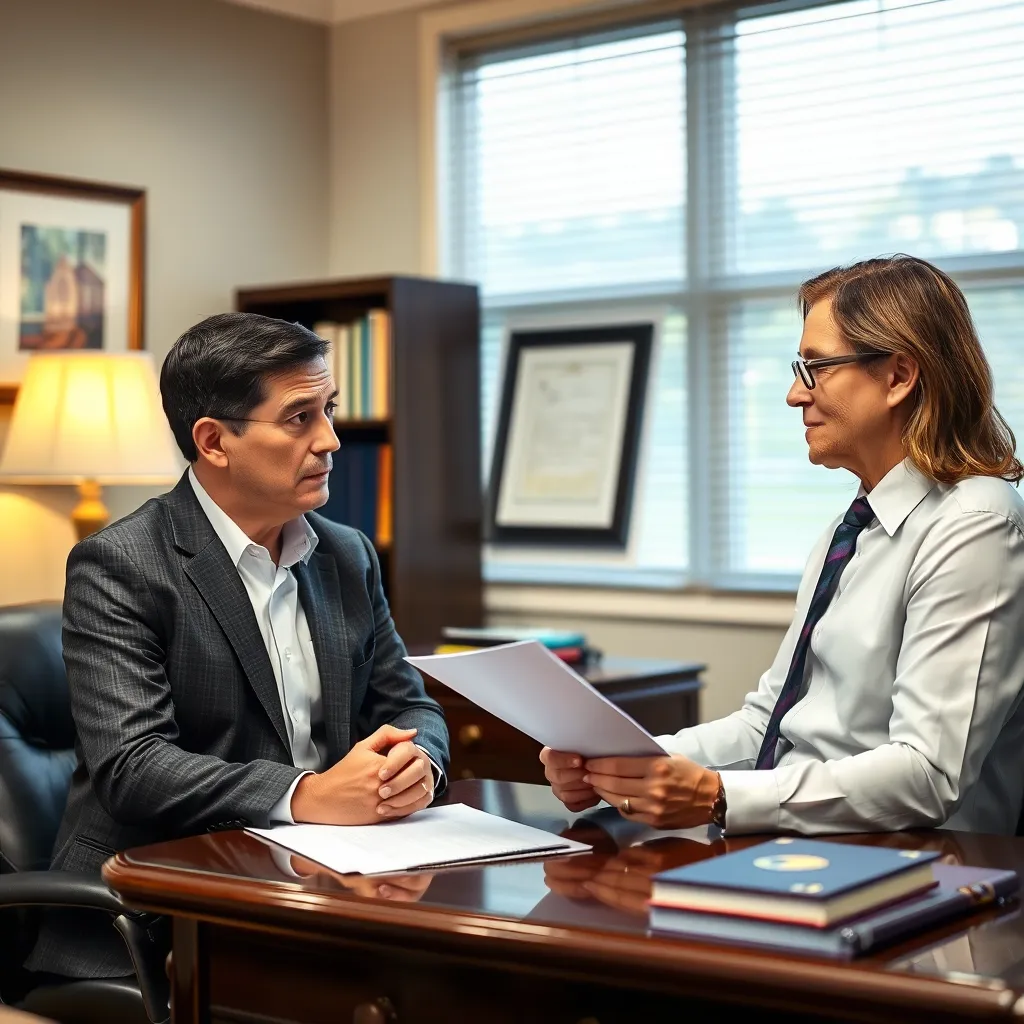
Property Division Lawyer Hampton, VA
When a marriage ends in the Hampton, Virginia area, the question of how to divide what the couple owns together is often one of the most difficult parts of the divorce process. Virginia law applies an equitable distribution framework rather than a 50/50 split. Residents of Hampton, the independent city that is part of the Hampton Roads region, need practical guidance on how Virginia courts classify, value, and ultimately divide marital property. Mr. Sris and his Of Counsel team at Law Offices Of SRIS, P.C. represent clients in property division matters in Hampton, helping them understand what the law requires and how the eleven statutory factors listed in Va. Code § 20‑107.3 influence the outcome. The firm’s approach focuses on building a well-prepared case that addresses each relevant factor, without promising a specific result. To request a consultation about property division in Hampton, call (888) 437‑7747. Law Offices Of SRIS, P.C. – Advocacy Without Borders.
What Property Division Means in Hampton, Virginia
Virginia is not a community property state. Instead, the Commonwealth follows the equitable distribution statute, which requires the circuit court to divide marital property fairly after considering the statutory factors. In Hampton, as elsewhere in Virginia, the Circuit Court for the City of Hampton has exclusive original jurisdiction over divorce and equitable distribution. That means the court decides which assets are marital and which are separate, then assigns marital property in a way that is equitable—not necessarily equal.
For Hampton residents, the process involves identifying property acquired during the marriage, valuing it, and presenting arguments about why a particular distribution is appropriate. Common assets include the marital home, bank and investment accounts, retirement and pension plans, business interests, and vehicles. Debts are also divided. The court’s consideration under Va. Code § 20‑107.3 includes the duration of the marriage, each spouse’s contributions to the family and to the acquisition of property, the parties’ ages and health, tax consequences, and other factors. Because Hampton is a vibrant community where many families have long-standing ties and complex financial lives, property division often requires careful attention to how assets were accumulated and whether any property may be classified as separate—such as an inheritance or a gift from a third party—and thus excluded from equitable distribution.
Mr. Sris and his Of Counsel team understand how Virginia courts approach these issues. They work with clients to organize financial information, identify marital and separate property, and develop a clear record for the court. While every case is unique, the firm’s experience with the equitable distribution framework helps Hampton residents navigate the process with a clearer picture of what the law requires.
How Mr. Sris and His Of Counsel Handle Property Division Cases
Property division matters in Hampton follow a path from informal negotiation to, when necessary, court-ordered equitable distribution. Mr. Sris and his Of Counsel take a structured approach that begins with understanding the client’s financial picture and the goals for the outcome. Early on, they help classify assets and debts, identify potential disputes over valuation, and determine whether a fair settlement can be reached outside of court.
When negotiation is not sufficient, the matter proceeds before the Hampton Circuit Court. The firm’s attorneys prepare for court by gathering financial records, working with valuation professionals when business interests or complex assets are involved, and presenting evidence on each of the eleven statutory factors. The process can include depositions, discovery, and evidentiary hearings. Throughout, clients receive guidance on the legal standards and the realistic range of outcomes under Virginia law. Because no two cases are identical, Mr. Sris and his Of Counsel tailor their advocacy to the facts and the client’s priorities, always aiming for a resolution that is both legally sound and practical.
About Mr. Sris and His Of Counsel Team
Mr. Sris, Owner and Founder of Law Offices Of SRIS, P.C., established the firm in 1997. As a former prosecutor, he brings a practical understanding of how legal disputes are litigated. He has practiced family law throughout Virginia for many years and is admitted in Virginia, Maryland, the District of Columbia, New Jersey, and New York. Mr. Sris testified before the Virginia House Courts of Justice Committee in support of 2019 HB 635 (chief patron Del. David Bulova), a bill that revised a subsection of the equitable distribution statute. That experience reflects his familiarity with the mechanics of Virginia property division law.
Supporting Mr. Sris is a team of Of Counsel attorneys who are engaged through Excella and who also concentrate on family law matters. Together, Mr. Sris and his Of Counsel bring extensive combined legal experience. Results may vary. The firm serves clients in Hampton and across Virginia, making every effort to provide clear, practical guidance while recognizing that each case depends on its own facts.
Frequently Asked Questions
Is Virginia a community property state?
No, Virginia is an equitable distribution state. The court divides marital property fairly but not necessarily equally, after considering the eleven factors in Va. Code § 20‑107.3. Separate property—such as assets owned before marriage or received by gift or inheritance during marriage—is generally not subject to division.
What property is divided in a Hampton divorce?
Marital property—assets acquired by either spouse during the marriage—is subject to equitable distribution. This can include real estate, bank accounts, retirement funds, business interests, personal property, and debts. The court determines the classification and value before deciding on a fair division.
How does the court decide a fair split?
The court evaluates eleven statutory factors listed in Va. Code § 20‑107.3. These include the length of the marriage, each spouse’s contributions, age and health, the sources of the property, and any circumstances that contributed to the breakup. The judge weighs the evidence and reaches a result that is equitable under all the circumstances.
Do I need a lawyer for property division in Hampton?
You are not required by law to hire a lawyer, but experienced legal guidance is important in property division. Identifying marital and separate property, valuing complex assets, and presenting evidence to the court are tasks that can significantly affect the outcome. An attorney helps protect your interests throughout the process.
How long does property division take in a Hampton divorce?
The timeline varies by case complexity and the court’s calendar. If the spouses can agree on a division and present a signed property settlement agreement, the matter can be resolved more quickly. Contested property division, especially when business valuation or contested classification is involved, may take longer.
What should I bring to a consultation about property division?
Bring any financial records that show what you and your spouse own and owe. Helpful documents include tax returns, bank statements, investment account summaries, retirement plan statements, deeds, vehicle titles, business financials, and a list of monthly expenses. The more organized your records, the easier it is to start building your case.
For guidance on your specific situation, reach Law Offices Of SRIS, P.C. at (888) 437‑7747.
Internal Resources
Property Division Lawyer Virginia Beach, VA · Property Division Lawyer Norfolk, VA · Property Division Lawyer Chesapeake, VA · Newport News Family Law Lawyer · Equitable Distribution Lawyer Hampton, VA
Virginia Legal Resources
Va. Code § 20‑107.3 – Equitable Distribution · Virginia Circuit Courts
Attorney advertising. Prior results do not guarantee a similar outcome. Case results depend on a variety of factors unique to each case. Results may vary.