
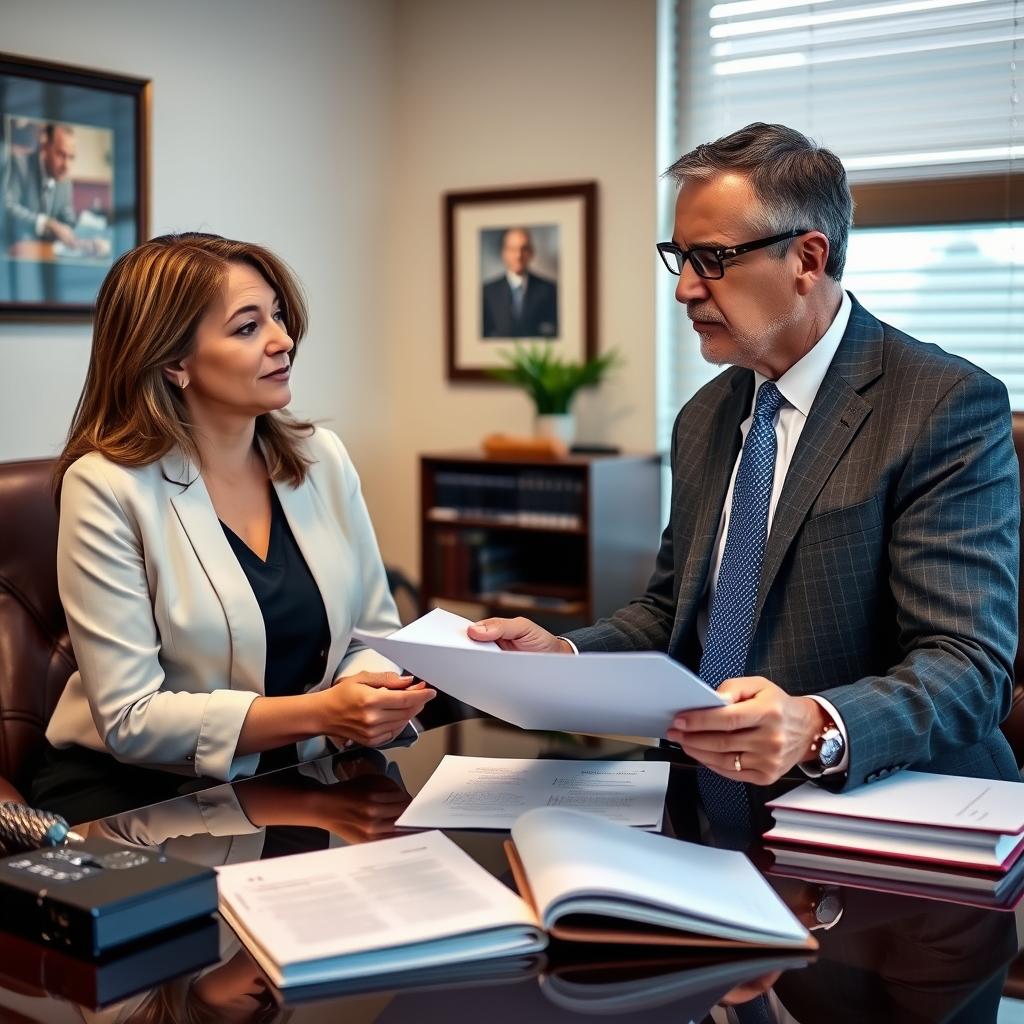
Property Division Lawyer Chesapeake, VA
Dividing a marital estate can feel overwhelming, especially when you are facing the prospect of untangling years of shared finances, real estate, retirement accounts, and personal property. If you are going through a divorce in Chesapeake, Virginia, you may be wondering how the court will classify and divide what you and your spouse have built together. In Virginia, property division follows the principle of equitable distribution under Va. Code § 20-107.3, which means marital assets are divided fairly—though not necessarily equally—based on a set of statutory factors the court must consider. For Chesapeake residents, these matters are heard at the Chesapeake Circuit Court, located at 307 Albemarle Drive. Mr. Sris, Owner and Founder of Law Offices Of SRIS, P.C., represents clients in property division matters throughout the Chesapeake area. To request a consultation, reach the firm at (888) 437-7747. Law Offices Of SRIS, P.C. – Advocacy Without Borders.
What Property Division Means in Chesapeake, Virginia
Property division in a Chesapeake divorce is governed by Virginia’s equitable distribution statute. Unlike community property states where marital assets are split evenly, Virginia courts divide property based on what is fair after weighing a range of considerations. The Chesapeake Circuit Court has exclusive jurisdiction over divorce and equitable distribution matters, while the Chesapeake Juvenile and Domestic Relations District Court handles standalone custody, visitation, and support issues. This division of court authority means that if your case involves both property division and child-related disputes, you may interact with two different courts within the same judicial system.
Chesapeake sits within Virginia’s First Judicial District, and its courts serve a broad community stretching from Deep Creek and Great Bridge to the Greenbrier area. The city’s proximity to major highways—I-64, I-464, I-664, and Route 168—makes it accessible to residents throughout Hampton Roads. Mr. Sris and his Of Counsel appear regularly in Chesapeake courts and are familiar with how local judges approach property classification, valuation disputes, and the equitable distribution factors under Virginia law. The firm’s Richmond Location serves clients in Chesapeake and the surrounding communities.
Under Virginia law, the first step in any property division case is classifying assets as marital, separate, or hybrid. Marital property includes assets acquired during the marriage, regardless of which spouse holds title. Separate property—assets owned before the marriage or received as a gift or inheritance—generally remains with the owning spouse. Hybrid property, which mixes marital and separate contributions, requires careful tracing and valuation. The court then values the marital estate and determines an equitable division based on factors such as the duration of the marriage, each spouse’s contributions to the family’s well-being, and the circumstances that led to the dissolution of the marriage.
How Mr. Sris and His Of Counsel Handle Property Division Cases
When a client contacts Law Offices Of SRIS, P.C. about a property division matter in Chesapeake, the process begins with a thorough review of the marital estate. Mr. Sris and his Of Counsel work to identify all assets subject to division, including real property, bank and investment accounts, business interests, retirement plans, vehicles, and personal property of significant value. They also examine debts and liabilities, which are part of the overall equitable distribution calculus. The goal is to develop a clear picture of what exists, how it was acquired, and how Virginia law is likely to classify each item.
Valuation can be one of the more complex aspects of a property division case, particularly when the marital estate includes a closely held business, professional practice, stock options, or retirement accounts with substantial balances. In these situations, forensic accountants and business valuation professionals may be engaged to provide analyses that the court can rely upon. Mr. Sris and his Of Counsel have experience coordinating with these professionals and presenting valuation evidence in Chesapeake Circuit Court. For cases involving real estate, the firm works with appraisers and reviews deed records to establish ownership and value. Throughout the process, the focus remains on positioning the client for a fair result under the equitable distribution framework.
Many Chesapeake property division cases are resolved through negotiation and a signed separation agreement rather than a contested trial. A property settlement agreement, when properly drafted and executed, allows both parties to maintain control over the outcome rather than leaving the decision to a judge. Mr. Sris and his Of Counsel negotiate on behalf of their clients, aiming to reach terms that reflect the statutory factors the court would consider while preserving assets and minimizing conflict. When settlement is not possible, the firm is prepared to litigate the property division issues at trial in Chesapeake Circuit Court.
About Mr. Sris and His Of Counsel Team
Mr. Sris is the Owner and Founder of Law Offices Of SRIS, P.C. A former prosecutor, he founded the firm in 1997 and is admitted to practice in Virginia, Maryland, the District of Columbia, New Jersey, and New York. His background gives him insight into how cases are built and presented in court. Mr. Sris testified before the Virginia House Courts of Justice Committee in support of 2019 HB 635 (chief patron Del. David Bulova). He leads the firm’s family law practice and works alongside a team of experienced Of Counsel attorneys who bring their own backgrounds to the firm’s Chesapeake property division cases.
The firm’s Of Counsel include attorneys with diverse experience—one served for fifteen years as a Virginia State Trooper before entering private practice, and another spent fourteen years handling child welfare cases under contract with the City of Alexandria. This collective experience informs the firm’s approach to property division matters, particularly when cases involve intersecting custody or support issues that may affect the overall financial picture. Mr. Sris and his Of Counsel work collaboratively, drawing on their backgrounds to serve clients throughout Chesapeake and the broader Hampton Roads region. Results may vary.
Frequently Asked Questions
How is marital property divided in a Chesapeake, Virginia divorce?
Virginia divides marital property through equitable distribution, meaning the court divides assets fairly based on statutory factors rather than automatically splitting everything evenly. The Chesapeake Circuit Court applies the factors listed in Va. Code § 20-107.3, which include the duration of the marriage, each spouse’s contributions to the family, the reasons for the divorce, and the ages and health of the parties. Separate property—assets acquired before marriage or received by gift or inheritance—is generally not subject to division, though the increase in value of separate property can sometimes be classified as marital.
What types of assets are subject to property division in Virginia?
Marital assets subject to division include real estate, bank accounts, investment portfolios, retirement accounts, business interests, vehicles, and personal property acquired during the marriage. Pensions, 401(k) plans, IRAs, and military retirement benefits are frequently among the most valuable assets in a Chesapeake divorce and require particular care in valuation and division. Debts incurred during the marriage are also part of the equitable distribution analysis. The court considers both assets and liabilities when determining a fair overall division of the marital estate.
How does the court value a business in a Chesapeake divorce?
Business valuation in a Virginia divorce typically involves a forensic accountant or business valuation professional who examines financial records, assesses the business’s fair market value, and determines whether the enterprise or any portion of it constitutes marital property. If the business was started during the marriage, it is presumptively marital, though a spouse who owned a business before the marriage may have a separate property claim to its pre-marital value. Mr. Sris and his Of Counsel work with qualified valuation professionals when business interests are part of a Chesapeake equitable distribution case.
Can a separation agreement resolve property division without going to court?
Yes, a property settlement agreement signed by both parties can resolve all property division issues without a trial in Chesapeake Circuit Court. When both spouses can agree on how to classify, value, and divide their marital assets, they can memorialize that agreement in writing. The court will generally incorporate a properly executed separation agreement into the final divorce decree. This approach allows the parties to maintain control over the outcome and avoid the uncertainty and expense of litigation.
How does military retirement affect property division in Chesapeake?
Military retirement benefits are treated as marital property subject to division under Virginia’s equitable distribution law, with the marital share calculated based on the portion of the service member’s career that overlapped with the marriage. Given Chesapeake’s proximity to multiple military installations, military divorce and retirement division are common issues in local family law cases. Division of military retired pay is governed by the Uniformed Services Former Spouses’ Protection Act and requires careful drafting of the court order to ensure proper administration by the Defense Finance and Accounting Service.
What if my spouse is hiding assets during our Chesapeake divorce?
If you suspect your spouse is concealing assets, an experienced property division lawyer can use discovery tools—including interrogatories, requests for production of documents, and depositions—to uncover hidden or undervalued marital property. Virginia law requires full financial disclosure in divorce cases. A spouse who intentionally conceals assets risks sanctions from the court, and the concealed assets may be awarded entirely to the other spouse. Mr. Sris and his Of Counsel scrutinize financial records in Chesapeake property division cases to ensure a complete and accurate picture of the marital estate.
For guidance on your specific situation, reach Law Offices Of SRIS, P.C. at (888) 437-7747.
Serving Chesapeake and Surrounding Communities
Mr. Sris and his Of Counsel represent clients in property division matters throughout Chesapeake and the nearby communities of Deep Creek, Great Bridge, and Greenbrier. The firm’s Richmond Location provides representation at the Chesapeake Circuit Court and the Chesapeake Juvenile and Domestic Relations District Court, both located at 307 Albemarle Drive in Chesapeake. To discuss how Virginia’s equitable distribution laws apply to your circumstances, contact the firm to schedule a consultation.
For additional information on family law matters in Virginia, you may refer to the Chesapeake Circuit Court and the Virginia Code § 20-107.3 for equitable distribution provisions.
Attorney advertising. Prior results do not guarantee a similar outcome.
Results may vary.
© 1997-2026 Law Offices Of SRIS, P.C.
Case results depend on a variety of factors unique to each case.