
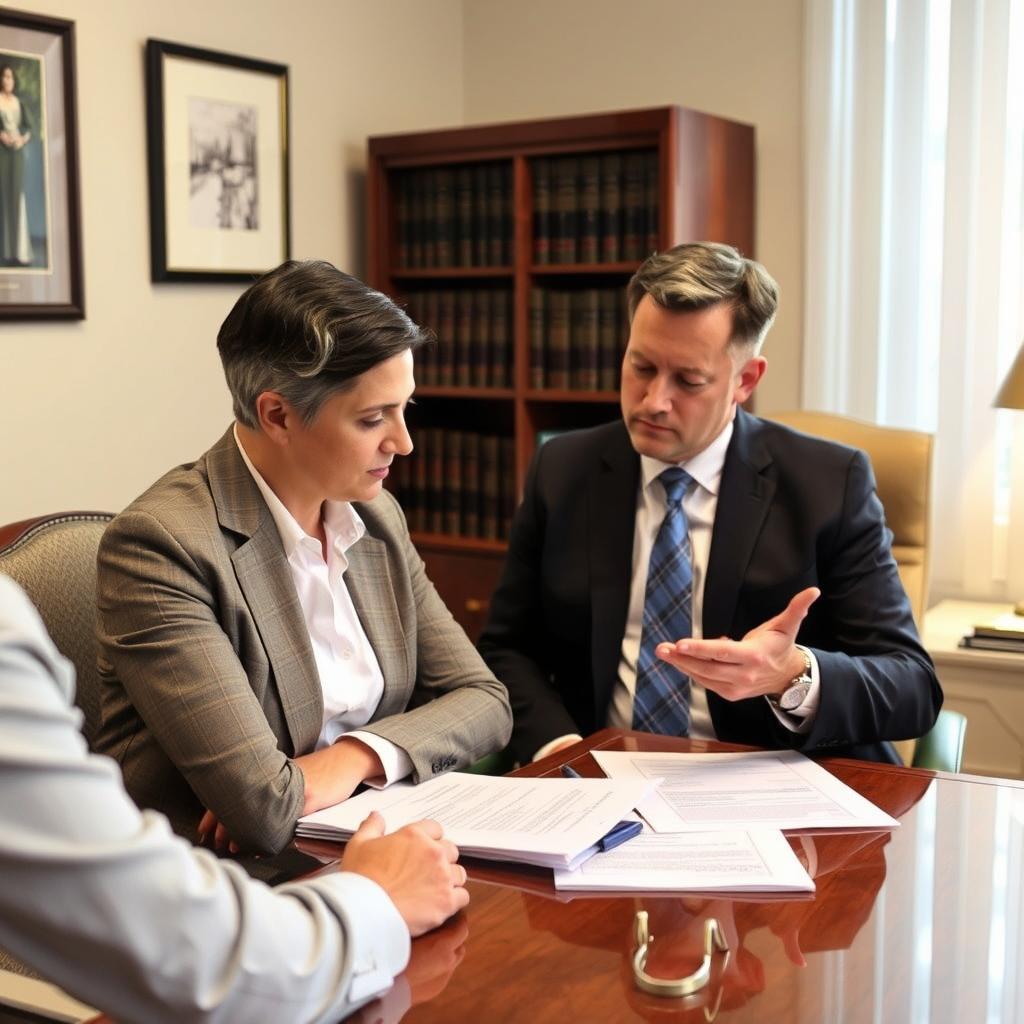
Felony Conviction Divorce Lawyer Suffolk, VA
If you are seeking a divorce in Suffolk, Virginia, and your spouse has been convicted of a felony and is serving a prison sentence, Virginia law provides a specific fault-based ground under Va. Code § 20-91(3). This ground allows you to file for divorce when your spouse has been convicted of a felony and sentenced to confinement for more than one year, and is actually confined. The divorce is filed in the Suffolk Circuit Court, located at 150 North Main Street, Suite 2G, Suffolk, VA 23434. Matters involving child custody, visitation, or support that arise during the divorce are handled by the Suffolk Juvenile and Domestic Relations District Court. Understanding how this ground interacts with equitable distribution, spousal support, and parenting arrangements is critical. Mr. Sris and his Of Counsel at Law Offices Of SRIS, P.C. Concentrate in family law matters and represent clients in Suffolk and across Virginia. Reach our firm at (888) 437-7747. Law Offices Of SRIS, P.C. – Advocacy Without Borders.
What Felony Conviction Divorce Means in Suffolk, Virginia
Under Virginia law, a spouse may file for divorce when the other spouse has been convicted of a felony, sentenced to confinement for more than one year, and is actually serving that sentence. This is a fault ground, meaning the divorce can be granted without the one-year separation period required for a no-fault divorce. The filing spouse must also satisfy Virginia’s six-month residency requirement. The complaint is filed in the Circuit Court, which has exclusive jurisdiction over divorce. In Suffolk, the Circuit Court at 150 North Main Street hears all divorce and equitable distribution matters. The Suffolk Juvenile and Domestic Relations District Court retains authority over custody, visitation, and child support, whether those issues are raised as part of the divorce or in a separate proceeding.
When a felony conviction ground is used, the division of marital property and determination of spousal support still follow Virginia’s equitable distribution statute, Va. Code § 20-107.3. The court considers factors such as the circumstances that contributed to the dissolution of the marriage, the length of the marriage, and the earning capacity of each spouse. Because the incarcerated spouse’s financial situation and parenting role are necessarily affected, the practical outcome often involves the non-incarcerated spouse receiving a larger share of marital assets or spousal support. However, the court retains discretion to achieve a fair, not necessarily equal, division. Mr. Sris and his Of Counsel bring extensive combined legal experience to these cases. Results may vary.
How Mr. Sris and His Of Counsel Handle Felony Conviction Divorce Cases
When a client consults with Law Offices Of SRIS, P.C. about a divorce based on a felony conviction, the first step is to confirm that all statutory requirements are met: the conviction, the sentence length, and the actual confinement. The firm then prepares and files a complaint for divorce in the Suffolk Circuit Court. If child custody or support is raised, the firm also addresses those matters, either within the complaint or through a separate petition in the Juvenile and Domestic Relations District Court. Mr. Sris, a former prosecutor, and his Of Counsel, which includes attorneys with backgrounds in Virginia law enforcement and family court practice, approach each case with an understanding of both the fault-based grounds and the local procedural requirements.
Because Virginia is an equitable distribution state, the team works to identify and classify all marital property, including retirement accounts, real estate, and personal property. When one spouse is incarcerated, issues such as service of process, the ability to participate in proceedings, and the practical division of assets require careful handling. Mr. Sris and his Of Counsel manage these complexities, coordinating with the court to ensure compliance with all procedural rules. The firm also represents clients in contested matters where the incarcerated spouse disputes the divorce or property division. Throughout the process, the firm’s objective is to achieve a final decree that addresses property division, spousal support, and custody in a manner consistent with the client’s interests, while efficiently navigating the Suffolk courts.
About Mr. Sris and His Of Counsel
Mr. Sris, Owner and Founder of Law Offices Of SRIS, P.C., is a former prosecutor with experience in criminal trial work. He founded the firm in 1997 and is admitted to practice in Virginia, Maryland, the District of Columbia, New Jersey, and New York. Mr. Sris testified before the Virginia House Courts of Justice Committee in support of 2019 HB 635 (chief patron Del. David Bulova), a bill that revised portions of the Virginia equitable distribution statute. His Of Counsel team includes attorneys with experience in Virginia family law, criminal defense, and law enforcement. Together, Mr. Sris and his Of Counsel bring extensive combined legal experience. Results may vary. The firm serves clients from its Richmond location, and By appointment only — call (888) 437-7747 to schedule.
Frequently Asked Questions
What is a felony conviction divorce in Virginia?
A felony conviction divorce is a fault-based divorce available when one spouse has been convicted of a felony, sentenced to confinement for more than one year, and is actually confined. Virginia Code § 20-91(3) permits the non-incarcerated spouse to file for divorce without the one-year separation period required for a no-fault divorce. The divorce is filed in the circuit court where the filing spouse resides or where the parties last cohabited, such as the Suffolk Circuit Court. This ground does not affect the classification of property or spousal support factors; those remain governed by Virginia’s equitable distribution law.
Do I need a lawyer to file for a felony conviction divorce in Suffolk?
You are not legally required to have a lawyer, but representing yourself carries significant risk, especially when a spouse is incarcerated. Issues such as proper service of process on an incarcerated spouse, equitable distribution of property, and custody determinations involve statutory requirements and local court procedures that are complex. An experienced family law attorney can help ensure that your complaint is properly filed, that all required documents are served, and that your property and parental rights are protected. For guidance on your specific situation, reach Law Offices Of SRIS, P.C. at (888) 437-7747.
Can a felony conviction affect custody and support in a Suffolk divorce?
Yes, a spouse’s felony conviction and incarceration can significantly influence custody and support determinations. Under Va. Code § 20-124.3, a court must consider the best interests of the child when deciding custody, and a parent’s incarceration is one factor the court will weigh. The Suffolk Juvenile and Domestic Relations District Court has jurisdiction over custody and support matters. Child support may be calculated based on the incarcerated parent’s limited income, but the court can impute income or order support consistent with Virginia’s guidelines. A property settlement agreement can resolve many of these issues, but if the parties cannot agree, the matter proceeds to a hearing.
How long does a felony conviction divorce take in Suffolk?
The timeline for a divorce based on felony conviction varies depending on court scheduling, the complexity of property division, and any contested custody matters. Unlike a no-fault divorce, there is no mandatory separation period once the conviction ground is established, so the case can proceed directly to the final hearing. The Suffolk Circuit Court sets a hearing date after the complaint is served and the defendant has an opportunity to respond. Uncontested matters may be resolved relatively quickly; contested issues involving valuation of marital property or custody disputes can extend the timeline. To discuss the details of your matter, contact Law Offices Of SRIS, P.C. at (888) 437-7747.
What if my spouse is incarcerated in another state?
A felony conviction from another state still satisfies Virginia’s ground for divorce if the spouse is serving a sentence of more than one year. Service of process on an out-of-state incarcerated spouse must comply with the Virginia rules for service outside the Commonwealth. Mr. Sris and his Of Counsel are experienced in managing service of process issues and can coordinate with the appropriate correctional facility to ensure the incarcerated spouse receives legal notice. The Suffolk Circuit Court retains jurisdiction as long as the filing spouse meets Virginia’s six-month residency requirement.
Related Family Law Services
Fairfax County family law representation • Prince William County family law attorney • Manassas family law lawyer
Virginia Legal Resources
Va. Code § 20-91 – Grounds for divorce • Suffolk Circuit Court
Attorney advertising. Prior results do not guarantee a similar outcome. Case results depend on a variety of factors unique to each case. Results may vary.