
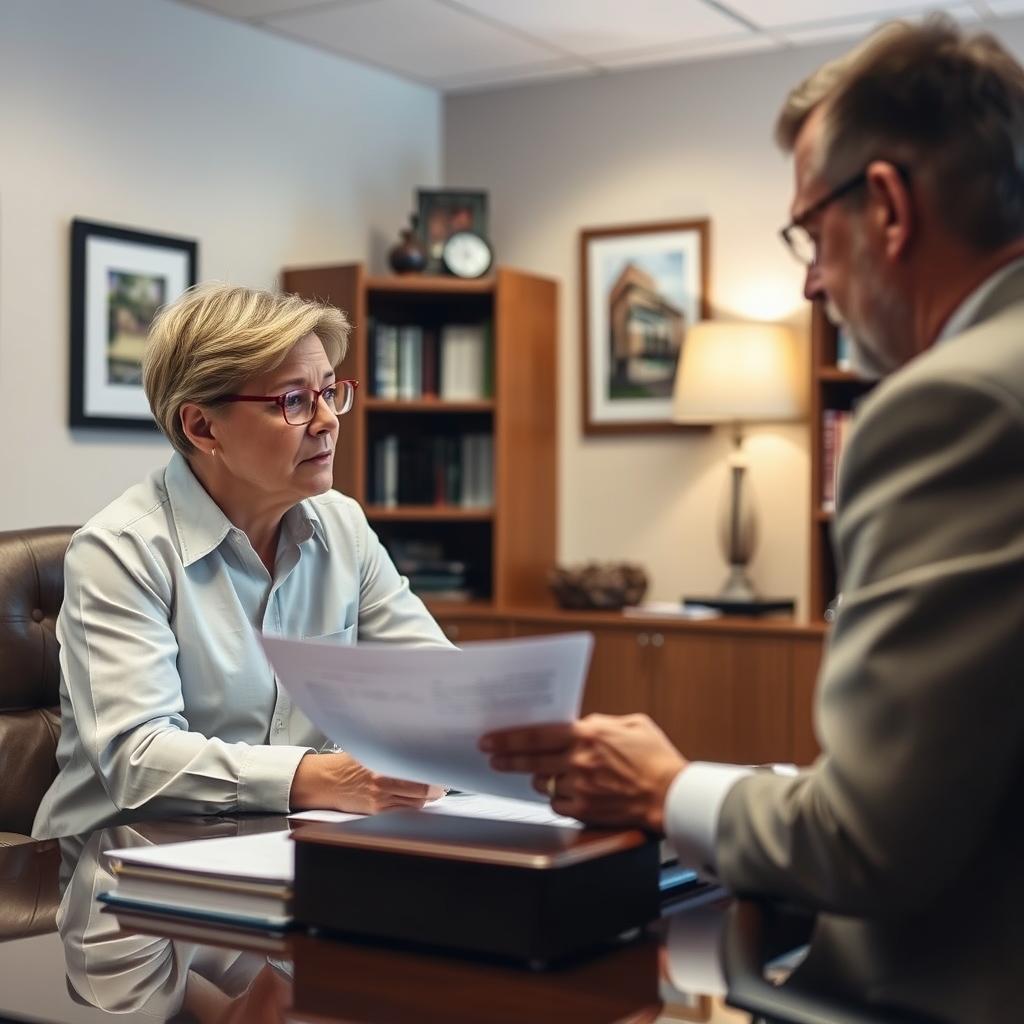
Retirement Account Division Lawyer James City County, VA
Dividing retirement assets during a divorce in James City County requires careful attention to Virginia’s equitable distribution statute and the specific rules that govern pensions, 401(k) plans, IRAs, military retirement benefits, and other deferred compensation. At Law Offices Of SRIS, P.C., Mr. Sris and his Of Counsel team represent clients whose marital estates include significant retirement holdings that must be identified, valued, and divided in a manner that is fair to both parties. James City County divorce and equitable distribution matters are heard in the James City County Circuit Court, located at 5201 Monticello Avenue, Suite 4, Williamsburg, Virginia. Whether you are a civilian employee, a federal worker, a member of the armed forces, or a small-business owner with retirement assets, receiving knowledgeable guidance at this stage can help protect your long-term financial interests. To request a consultation about your retirement account division matter, reach Law Offices Of SRIS, P.C. at (888) 437-7747. Law Offices Of SRIS, P.C. – Advocacy Without Borders.
What Retirement Account Division Means in James City County
Virginia is not a community property state. Under Va. Code § 20-107.3, the James City County Circuit Court classifies property as marital, separate, or hybrid, then distributes the marital portion equitably after considering eleven statutory factors. Retirement accounts are treated as marital property to the extent they were accumulated during the marriage, regardless of whose name appears on the account. This means a 401(k), pension, IRA, Thrift Savings Plan, military retirement, or profit-sharing plan can all become part of the property division process. Proper valuation often requires input from a forensic accountant or a pension valuator, and the court may issue a qualified domestic relations order—commonly called a QDRO—to direct the plan administrator to pay a portion of the account to the non-employee spouse. Because the Williamsburg/James City County General District Court does not handle divorce or equitable distribution, all retirement division issues are resolved in the Circuit Court, where Mr. Sris and his Of Counsel regularly appear.
James City County encompasses Williamsburg, Norge, Toano, and Lightfoot, and lies within the Ninth Judicial District. The county’s proximity to major military installations, federal agencies, and research institutions means many divorcing spouses hold federal civilian or military retirement accounts that are governed by specific federal rules in addition to Virginia law. Dividing a military pension under the Uniformed Services Former Spouses’ Protection Act, for example, involves distinct procedures that differ from those applied to a private-sector 401(k). Matters involving real estate holdings, business interests, and retirement assets frequently overlap, and the Circuit Court’s equitable distribution docket requires organized presentation of asset valuations and proposed division calculations. Clients who consult with experienced family law counsel before filing can better understand how their specific retirement plans are likely to be treated under Virginia’s statutory framework.
How Mr. Sris and His Of Counsel Handle Retirement Account Division Cases
Retirement account division begins with identifying every account that is subject to equitable distribution, including plans that may have been established before the marriage but continued to grow during it. Mr. Sris and his Of Counsel work with qualified financial professionals to value those accounts, trace the marital and separate components, and address tax implications that can arise when different types of retirement assets are divided. In some cases, the parties are able to negotiate a division formula that is incorporated into a separation agreement, avoiding extended litigation over valuation disputes. When agreement is not possible, the matter proceeds in the James City County Circuit Court, where the judge applies the statutory factors under Va. Code § 20-107.3. The firm’s approach emphasizes thorough preparation so that the record reflects a clear and legally sound basis for the proposed distribution.
The mechanics of dividing a retirement account often require a qualified domestic relations order that complies with both state law and the plan’s governing documents. Mr. Sris and his Of Counsel coordinate the preparation of QDROs and review proposed orders prepared by opposing counsel or third-party administrators to confirm they accurately reflect the court’s ruling and are acceptable to the plan administrator. For military pensions, the firm addresses the additional requirements imposed by federal law, including the jurisdictional threshold that determines whether a state court can divide the pension. Throughout the process, the focus remains on securing a division that is equitable under Virginia law while minimizing unnecessary administrative delays and tax consequences. Every case is different, and the strategy is tailored to the specific types of retirement assets involved.
About Mr. Sris and His Of Counsel Team
Mr. Sris, Owner and Founder of Law Offices Of SRIS, P.C., has practiced law since 1997 and is admitted in Virginia, Maryland, the District of Columbia, New Jersey, and New York. A former prosecutor, Mr. Sris testified before the Virginia House Courts of Justice Committee in support of 2019 HB 635 (chief patron Del. David Bulova), which revised Va. Code § 20-107.3(g)—the subsection of the equitable distribution statute that governs the division of retirement accounts and other deferred compensation. His firsthand familiarity with the legislative intent behind this provision informs the firm’s approach to retirement account division cases. Mr. Sris and his Of Counsel bring over 120 years of combined legal experience to family law matters and have documented over 4,739+ firm-wide results. Results may vary.
Mr. Sris works closely with the firm’s Of Counsel team, whose members include former law enforcement professionals and litigators with decades of experience in Virginia courts. While Mr. Sris provides strategic direction on complex equitable distribution matters, the collective knowledge of the team allows the firm to address the full range of issues that arise when retirement assets are part of a divorce—from tracing premarital contributions to coordinating with plan administrators and addressing tax-sensitive distribution structures. Clients benefit from coordinated representation that draws on the firm’s extensive background in Virginia family law procedure.
Frequently Asked Questions
How are retirement accounts divided in a Virginia divorce?
Virginia courts divide retirement accounts as marital property under the equitable distribution factors in Va. Code § 20-107.3, which does not require a fifty-fifty split. The court first classifies the portion of each account accumulated during the marriage as marital, then values it and considers the eleven statutory factors—such as the length of the marriage, each spouse’s contributions to the family, and the tax consequences of the proposed division. A qualified domestic relations order (QDRO) is often necessary to direct the plan administrator to pay a share to the non-employee spouse without triggering early withdrawal penalties. For federal and military plans, additional federal rules apply.
Is my 401(k) considered marital property in Virginia?
Yes, any portion of a 401(k) that was accumulated during the marriage is generally classified as marital property subject to equitable distribution. Contributions made before the marriage, along with any passive growth on those premarital contributions, may be considered separate property. The marital portion includes employer contributions and employee contributions made from marital income during the marriage, as well as any increases in value attributable to those contributions. Tracing the separate and marital components often requires account statements and financial records, and the court may rely on experienced attorney analysis to determine the precise division. The final division must still satisfy the equitable-distribution factors under Virginia law.
What is a QDRO and why is it necessary?
A qualified domestic relations order (QDRO) is a court order that instructs a retirement plan administrator to pay a portion of the account to an alternate payee, typically the non-employee spouse. Without a valid QDRO, the plan administrator cannot divide the account without violating federal tax rules that protect retirement plans. For many employer-sponsored plans, including 401(k)s and traditional pension plans, the QDRO must meet specific requirements under ERISA and be accepted by the plan before distribution occurs. In Virginia, the QDRO is prepared after the court enters the equitable distribution order, and careful drafting is necessary to conform to both the court’s ruling and the plan’s administrative procedures.
Can a prenuptial agreement protect my retirement account?
Yes, a valid prenuptial agreement can designate retirement accounts as separate property and limit their division in a divorce, provided the agreement complies with Virginia law. Virginia courts will enforce prenuptial agreements that are entered into voluntarily, with full financial disclosure, and without unconscionability. If an agreement expressly states that a particular retirement account remains the sole property of the account holder, the court will generally respect that provision. However, if the agreement is later challenged on grounds such as fraud or duress, or if it fails to adequately address the classification of assets, a court may set it aside in whole or in part. An attorney can review the terms of an existing agreement and advise whether it is likely to withstand scrutiny.
Do I need a lawyer for retirement account division in James City County?
You are not legally required to have a lawyer, but the complexity of Virginia’s equitable distribution rules and the technical requirements for QDROs make experienced legal guidance important. Dividing retirement assets involves valuation issues, tax considerations, and compliance with both state statutes and the plan’s governing federal rules. A mistake in the QDRO or in the classification of an account can result in unintended tax liabilities or a distribution that does not reflect the court’s intent. Mr. Sris and his Of Counsel handle retirement division matters in the James City County Circuit Court and work with financial professionals to address the specific challenges presented by military, federal, and private-sector retirement plans.
For guidance on your specific situation, reach Law Offices Of SRIS, P.C. at (888) 437-7747.
Related pages: York County family law lawyers · Williamsburg family law lawyers · Fairfax County family law lawyers
Virginia primary sources: Virginia Code Title 20 – Domestic Relations · Virginia Judicial System
Attorney advertising. Prior results do not guarantee a similar outcome. Case results depend on a variety of factors unique to each case. Results may vary.