
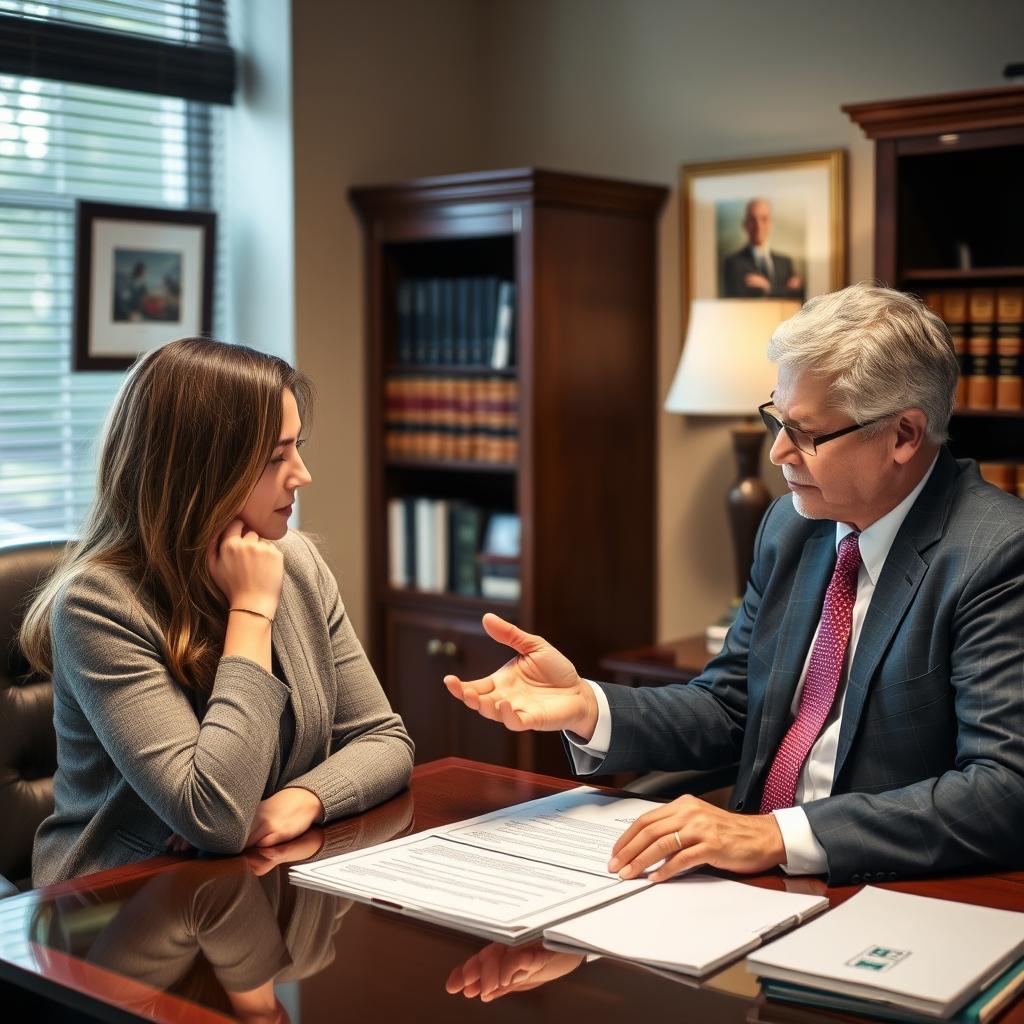
Spousal Support Lawyer Fluvanna County
You need a Spousal Support Lawyer Fluvanna County to handle court orders for financial payments after divorce. Virginia law uses specific statutes to determine eligibility and amount. The Law Offices Of SRIS, P.C. —Advocacy Without Borders. can represent you in the Fluvanna County Circuit Court. Our team understands local judicial preferences for support calculations. (Confirmed by SRIS, P.C.)
Statutory Definition of Spousal Support in Virginia
Spousal support in Virginia is governed by statute, not judicial whim. The primary law is Virginia Code § 20-107.1. This statute authorizes courts to order periodic payments for a spouse’s support and maintenance. It applies during any suit for divorce, whether contested or not. The code provides the legal framework judges must use. A Spousal Support Lawyer Fluvanna County uses this statute to build your case. The law requires consideration of multiple statutory factors. These factors determine if support is warranted and for how much. The goal is equity, not punishment, based on demonstrated need and ability to pay.
Virginia Code § 20-107.1 — Civil Monetary Award — Duration and amount set by court based on statutory factors.
The statute does not set a fixed formula or maximum penalty like criminal law. Instead, it lists factors the court must consider. These factors include the needs and financial resources of each party. The court also considers the standard of living during the marriage. The duration of the marriage is a critical component. The physical and mental condition of each party is relevant. Contributions to family well-being, including childcare, are weighed. Any equitable distribution award impacts the support calculation. Fault grounds for divorce can also influence the final order.
Virginia law requires a detailed analysis of financial circumstances.
The court examines tax returns, pay stubs, and living expenses. This analysis determines the payor’s ability and the payee’s need. A Spousal Support Lawyer Fluvanna County gathers this evidence systematically. The court order can be for a defined period or indefinite. Modifications are possible if circumstances change substantially. Termination events are typically remarriage or death of a party.
The court has broad discretion in setting the support amount.
Judges in Fluvanna County apply the statutory factors to the facts. There is no simple calculator for spousal support in Virginia. Local judicial temperament influences how factors are prioritized. An experienced attorney anticipates how a specific judge will rule. This local insight is crucial for setting realistic client expectations.
Support is distinct from property division under Virginia law.
Spousal support is an ongoing payment obligation. Equitable distribution divides marital assets and debts. These are separate legal actions under different code sections. A support order can be established before the final divorce decree. It is often addressed in temporary support hearings. Understanding this distinction prevents strategic errors in litigation. Learn more about Virginia legal services.
The Insider Procedural Edge in Fluvanna County
Your case will be heard at the Fluvanna County Circuit Court located at 132 Main Street, Palmyra, VA 22963. This court handles all divorce and spousal support matters for the county. Filings must be made with the Clerk of the Circuit Court. The specific procedural rules of this court must be followed precisely. Local rules dictate formatting, filing deadlines, and hearing schedules. Missing a deadline can jeopardize your rights to support. A local attorney knows the clerks and the preferred filing procedures.
The filing fee for a Complaint for Divorce that includes a request for support is set by state law. Additional fees apply for motions and other pleadings. The court’s schedule can affect how quickly your hearing is set. Fluvanna County dockets move at a predictable pace. Uncontested support agreements may be finalized more quickly. Contested hearings require more time for discovery and negotiation. The court encourages settlement where possible. A skilled negotiator can often resolve support outside of court.
Initial filings must properly plead the grounds for support.
The complaint must allege facts supporting the statutory factors. Vague pleadings can be challenged and dismissed. Financial affidavits are required to substantiate claims of need and ability. These documents require detailed, accurate financial disclosure. Inaccurate disclosures can lead to sanctions and loss of credibility.
Temporary support hearings occur early in the process.
A motion for pendente lite support can be filed soon after the initial complaint. This provides financial stability during the divorce litigation. The standard for temporary support is similar to final support. The court makes a quick assessment based on presented affidavits. Winning a favorable temporary order can set the tone for negotiations.
Final hearings require thorough evidence presentation.
If no agreement is reached, a final evidentiary hearing is held. Both parties testify and present documentary evidence. Cross-examination challenges the other party’s claims of need or limited ability. The judge then applies the § 20-107.1 factors. The written order must specify the amount, duration, and payment method. It becomes a court order enforceable by contempt. Learn more about criminal defense representation.
Penalties & Defense Strategies for Support Orders
The most common penalty is a contempt finding for non-payment, resulting in fines or jail. Failure to pay court-ordered spousal support is not a minor issue. The payee can file a Rule to Show Cause for contempt. The court will hold a hearing to determine if non-payment was willful. If willful contempt is proven, the judge has several enforcement tools. These tools are designed to compel compliance with the existing order. Defenses focus on proving an inability to pay, not an unwillingness.
| Offense / Issue | Potential Penalty / Consequence | Notes |
|---|---|---|
| Willful Non-Payment of Support | Contempt of Court; Fines; Jail up to 10 days; Attorney’s Fees | Civil, not criminal, contempt. Jail is coercive, not punitive. |
| Underreporting Income | Modified Support Order Retroactively; Sanctions; Payment of Other Party’s Fees | Court can impute income based on earning capacity. |
| Failure to Appear for Deposition/Hearing | Default Judgment; Case Decided Against You; Monetary Sanctions | Your absence does not stop the proceeding. |
| Seeking Modification Without Substantial Change | Denial of Motion; Order to Pay Other Side’s Legal Costs | Frivolous filings are discouraged by cost-shifting. |
[Insider Insight] Fluvanna County prosecutors do not handle civil contempt for support. Enforcement is a private action brought by the supported spouse. The Commonwealth’s Attorney typically only gets involved for criminal non-support under a separate statute. This means the burden of initiating enforcement falls on you and your lawyer. Local judges expect clear evidence of a willful violation. They also expect the paying party to have sought a modification first if unable to pay. Demonstrating proactive communication about financial hardship can be a partial defense.
Modification is the primary defense against a contempt allegation.
If you cannot pay, you must file a Petition to Modify support. You must show a material change in circumstances since the last order. Job loss, disability, or a significant income drop are common grounds. The key is to file before you fall severely behind. Retroactive modifications are rarely granted. The court looks more favorably on those who act promptly.
Income imputation is a common tactic used by supported spouses.
If you are voluntarily underemployed, the court can impute income to you. This means you may be ordered to pay based on what you could earn. The supported spouse’s attorney will present evidence of your earning potential. Your defense must show your underemployment is involuntary or reasonable. Medical evidence or job market analysis may be necessary.
Enforcement tools include liens, wage garnishment, and license suspension.
Beyond contempt, a support order is a judgment. It can be docketed to create a lien on your real estate. Income withholding (wage garnishment) is often automatic. The DMV can suspend your driver’s license for arrears. Professional licenses can also be suspended. A defense strategy involves addressing arrears proactively to avoid these remedies. Learn more about DUI defense services.
Why Hire SRIS, P.C. for Your Fluvanna County Support Case
Our lead attorney for family law matters has over a decade of Virginia courtroom experience. This attorney has handled numerous support cases in Fluvanna County Circuit Court. They know the judges, the local rules, and the common arguments used. This experience translates into efficient and effective representation for you. We don’t waste time on legal theories that won’t resonate locally. We focus on the evidence and arguments that persuade Fluvanna judges.
Primary Attorney: Our seasoned family law attorney focuses on Fluvanna County cases. This attorney’s background includes extensive litigation of support and equitable distribution. They understand how to present complex financial cases clearly. Their goal is to achieve a stable and enforceable financial outcome for you.
SRIS, P.C. has a track record of achieving favorable settlements and court orders in Fluvanna County. We prepare every case as if it will go to trial. This preparation gives us use in negotiations. The other side knows we are ready to present evidence in court. Our approach is direct and focused on your financial security. We analyze tax returns, business valuations, and lifestyle expenses thoroughly. We identify the strengths and weaknesses of your position early. We then develop a strategy to maximize your result under Virginia law.
Our firm provides Advocacy Without Borders. We have the resources to handle complex financial discovery. We can consult with financial experienced attorneys when necessary. We serve clients throughout Virginia from our network of Locations. For your Fluvanna County case, you benefit from localized knowledge and broad firm support. You are not hiring a solo practitioner with limited backup. You are hiring a team with depth and experience.
Localized FAQs on Spousal Support in Fluvanna County
How long does spousal support last in Virginia?
Virginia courts set support duration based on the marriage length and statutory factors. There is no automatic formula. Support can be temporary, rehabilitative, or permanent. The specific terms are in your court order. Learn more about our experienced legal team.
Can spousal support be modified in Fluvanna County?
Yes, if you prove a material change in circumstances. Job loss, illness, or a significant income change are common grounds. You must file a formal petition with the Circuit Court to request a modification.
What happens if my ex-spouse refuses to pay court-ordered support?
You can file a Rule to Show Cause for contempt in Fluvanna Circuit Court. The court can enforce payment through wage garnishment, liens, or even jail time for willful non-payment. An attorney can initiate these enforcement actions.
Is my new spouse’s income considered for modifying my support obligation?
Generally, no. A new spouse’s income is not directly considered in Virginia. However, the changed household expenses may be a factor. The primary focus remains on the original parties’ financial situations.
How is the amount of spousal support calculated?
Virginia uses a statutory factor test, not a simple formula. The court considers both parties’ incomes, needs, the marriage standard of living, and other factors from Code § 20-107.1. Local judges have discretion in weighing these factors.
Proximity, CTA & Disclaimer
Our legal team serves Fluvanna County from our central Virginia presence. The Fluvanna County Circuit Court is the primary venue for your support case. For a detailed case review, schedule a Consultation by appointment. Call our team 24/7 to discuss your spousal support matter with a Spousal Support Lawyer Fluvanna County. We will analyze the specifics of your financial situation and the applicable law.
Law Offices Of SRIS, P.C.—Advocacy Without Borders.
Consultation by appointment. Call 24/7.
Past results do not predict future outcomes.