
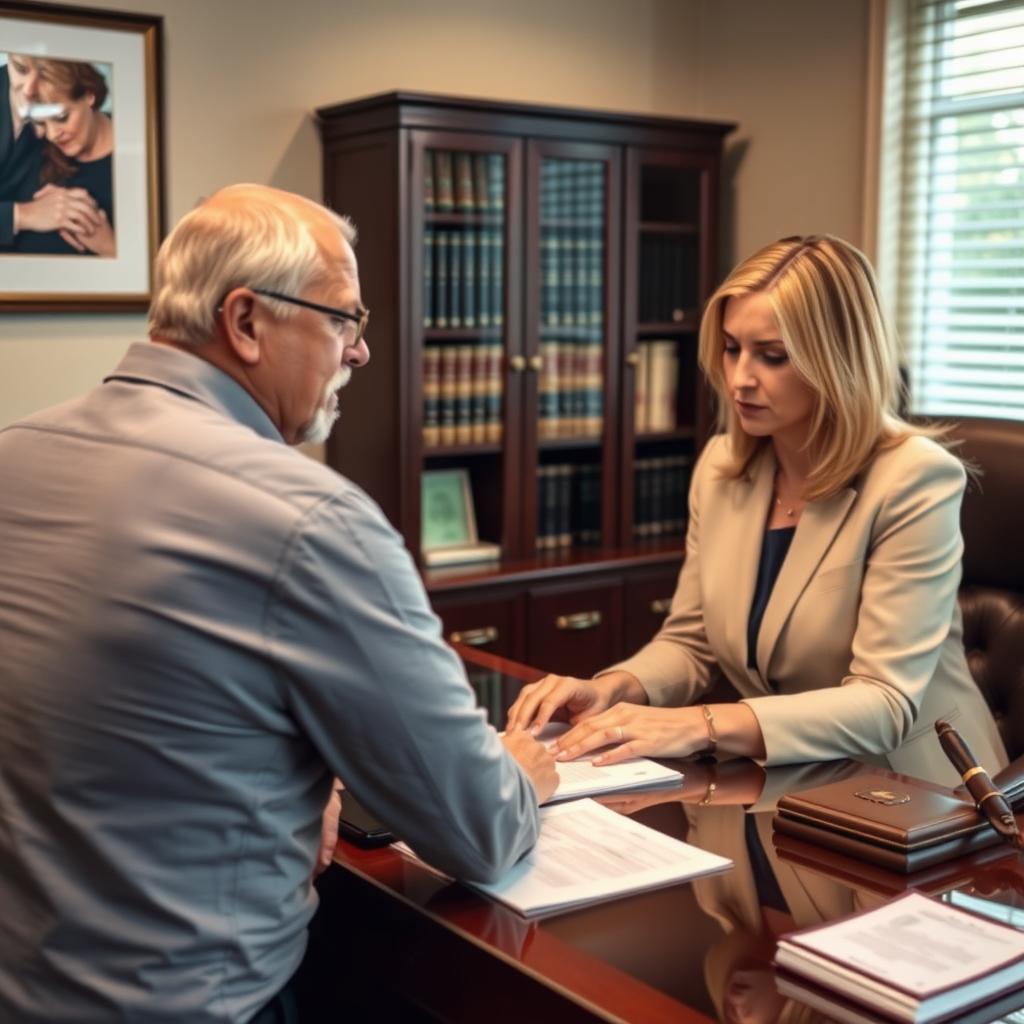
Divorce Decree Enforcement Lawyer Spotsylvania County
You need a Divorce Decree Enforcement Lawyer Spotsylvania County when your former spouse violates the court’s final order. Law Offices Of SRIS, P.C. —Advocacy Without Borders. handles these contempt actions in Spotsylvania County Circuit Court. We file motions to show cause to compel compliance with property division, alimony, and child support orders. Our goal is to secure the judgment you are owed. (Confirmed by SRIS, P.C.)
Statutory Definition of Decree Enforcement in Virginia
Enforcing a divorce decree in Spotsylvania County is governed by Virginia contempt statutes. The core action is a Rule to Show Cause for civil contempt. This is not a new lawsuit. It is a motion filed within your existing divorce case. The court uses its inherent power to compel obedience to its own orders. Failure to comply can result in fines or jail time. The purpose is coercive, not punitive, to force the obligated party to act.
Va. Code § 20-121 — Civil Contempt — Penalty until compliance. This statute authorizes courts to use contempt powers to enforce decrees for alimony, support, and property distribution. The court can impose fines or imprisonment. These penalties are typically purged upon compliance with the original order. The maximum penalty is not fixed by statute but is at the court’s discretion to secure compliance.
Virginia law treats a final divorce decree as a binding court order. Every provision is enforceable. This includes division of retirement accounts, real estate transfers, and payment of marital debts. Spousal support and child support have separate, detailed enforcement mechanisms under Title 20. A post-divorce enforcement lawyer Spotsylvania County handles these overlapping statutes. The key is identifying the correct legal vehicle for the specific violation.
What specific orders can be enforced after divorce?
All monetary and non-monetary provisions in your final decree are enforceable. This includes one-time property division payments and ongoing spousal support. It also covers the transfer of vehicle titles or house deeds. Court-ordered life insurance policies for support security can be enforced. Failure to maintain the policy is a violation. Orders to divide a 401(k) via a Qualified Domestic Relations Order (QDRO) are strictly enforced. A lawyer ensures the QDRO is drafted correctly and filed with the plan administrator.
How does Virginia law define contempt in family cases?
Contempt requires a clear court order, knowledge of the order, and a willful failure to comply. “Willful” means a deliberate or intentional act, not an accident. Inability to pay due to job loss is a defense to non-payment. Simply refusing to pay when able is willful. The burden of proof is on the moving party to show the violation by clear and convincing evidence. This is a higher standard than a typical civil case. A skilled attorney gathers bank records, employment data, and communications to meet this standard. Learn more about Virginia family law services.
What is the difference between civil and criminal contempt here?
Civil contempt aims to compel future compliance with the court order for the benefit of the other party. The penalty is typically a fine or jail sentence that ends when the person complies. Criminal contempt punishes a past violation of the court’s authority. The penalty is a fixed fine or jail term. Most post-divorce enforcement actions in Spotsylvania County are for civil contempt. The goal is to get you your money or property, not just to punish the other side.
The Insider Procedural Edge in Spotsylvania County
Enforcement actions are filed in the Spotsylvania County Circuit Court at 9115 Courthouse Rd, Spotsylvania, VA 22553. You must file a Motion for Rule to Show Cause in your original divorce case. The court clerk will assign a hearing date. Filing fees are required and change periodically. Procedural specifics for Spotsylvania County are reviewed during a Consultation by appointment at our Spotsylvania Location. The local judges expect strict adherence to procedural rules. Missing a deadline or filing incorrectly can cause significant delays.
The timeline from filing to hearing is typically 4 to 8 weeks. The other party must be formally served with your motion and the court’s show cause order. If they fail to appear at the hearing, the judge may issue a capias (bench warrant). For asset-based enforcement, such as seizing a bank account, different writs are used. A writ of fieri facias (fi. fa.) allows the sheriff to levy on property. This process requires precise documentation of the debtor’s assets. An experienced attorney knows how to locate these assets efficiently.
What is the exact process for filing a show cause motion?
You draft a motion detailing each violated decree provision and request a rule to show cause. The motion is filed with the Circuit Court clerk. A judge reviews it and may issue the rule, setting a hearing date. The other party is served by a sheriff or private process server. At the hearing, both sides present evidence and arguments. The judge then rules on whether contempt occurred and sets terms for compliance. Having a lawyer draft the initial motion correctly is critical for judicial approval. Learn more about criminal defense representation.
How long does the entire enforcement process take?
A direct contempt motion can take 2 to 3 months for a hearing. Complex cases involving asset discovery or multiple violations take longer. If wage garnishment is sought for support arrears, that process can begin relatively quickly. Enforcing a property division order for a retirement account requires drafting a QDRO. Court approval of a QDRO can add 60 to 90 days. The opposing party’s tactics can also delay proceedings. An attorney manages these timelines and pushes for expedited hearings when necessary.
Penalties & Defense Strategies for Non-Compliance
The most common penalty is a monetary judgment for arrears plus interest and your attorney’s fees. For ongoing refusal to comply, the court can impose coercive fines or jail time. The judge has broad discretion to craft a remedy that secures compliance. The table below outlines potential penalties for violating a Spotsylvania County divorce decree.
| Offense | Penalty | Notes |
|---|---|---|
| Failure to Pay Property Settlement | Judgment for amount owed + 6% interest | Court can also award attorney’s fees to the prevailing party. |
| Non-Payment of Spousal Support | Wage garnishment, lien on property, contempt sanctions | Arrears accrue interest at the judgment rate set by Virginia law. |
| Refusal to Transfer Property Title | Court may sign deed on behalf of refusing party | Judge can hold refusing party in contempt until they comply. |
| Willful Violation of Custody/Visitation Order | Contempt finding, make-up visitation, modification of custody | Repeat violations can lead to changes in primary custody. |
| Failure to Comply with Court-Ordered QDRO | Contempt sanctions; court can appoint someone to sign | Delays can cause significant financial loss in retirement accounts. |
[Insider Insight] Spotsylvania County prosecutors do not handle these private civil contempt matters. The enforcement is entirely driven by the aggrieved party’s attorney. Local judges are familiar with tactics used to delay enforcement. They often look favorably on requests for attorney’s fees to be paid by the non-compliant party. Demonstrating a pattern of willful disregard is key. Presenting clear evidence, like bank statements showing funds were available, is crucial for a successful outcome.
What are the real consequences of a contempt finding?
A contempt finding can result in immediate incarceration until the person complies with the order. More commonly, the court imposes a suspended jail sentence conditioned on compliance. The offending party may be ordered to pay all of your legal fees related to the enforcement action. For financial violations, the court can issue an income deduction order for ongoing support. The contempt finding becomes part of the court record. It can negatively impact future requests they make to the court, such as for modification of support. Learn more about personal injury claims.
Can I get my attorney’s fees paid by the other side?
Virginia law allows the court to award attorney’s fees to the prevailing party in contempt actions. The judge considers the relative financial resources of both parties and the reasonableness of the fees. If the other party’s violation was without justification, fee awards are common. You must provide the court with a detailed accounting of time spent and rates. The fee award is often included in the final enforcement order. This provides significant financial use to secure compliance.
Why Hire SRIS, P.C. for Enforcement in Spotsylvania County
Our lead family law attorney has over a decade of focused experience in Virginia circuit courts. We understand the local procedures and judicial expectations in Spotsylvania. SRIS, P.C. has secured compliance and judgments for clients facing post-divorce resistance. We move aggressively to file the necessary motions and compel action. Our approach is direct and strategic, aimed at resolving your enforcement issue efficiently.
Attorney Background: Our family law team includes attorneys deeply familiar with Virginia Code Title 20. They have handled numerous enforcement actions for property division, support arrears, and QDRO implementation. They prepare cases with the evidentiary rigor required for contempt proceedings. This includes subpoenaing financial records and crafting precise legal arguments for the court.
We differentiate ourselves by our persistent follow-through. Filing the motion is just the first step. We monitor the other party’s compliance with any court-ordered payment plan. We initiate wage garnishments or asset levies without hesitation if orders are ignored. Our Spotsylvania Location allows us to file documents and appear for hearings promptly. We provide clear, blunt assessments of your case’s strengths and the likely path to recovery. You need a lawyer who will act, not just advise. Learn more about our experienced legal team.
Localized FAQs on Divorce Decree Enforcement
What is the first step to enforce a divorce decree in Spotsylvania County?
The first step is to hire a lawyer to review your final order and document the violations. Your attorney will then draft and file a Motion for Rule to Show Cause in Spotsylvania Circuit Court. This motion asks the judge to hold the other party in contempt for non-compliance.
How much does it cost to hire an enforcement lawyer?
Legal fees depend on the complexity of the violations and the resistance encountered. Many cases are handled on an hourly basis. The court may order the non-compliant party to pay a portion of your legal fees if you prevail in the enforcement action.
Can my ex-spouse go to jail for not following the divorce decree?
Yes, for willful violations, a judge can impose jail time for civil contempt. The purpose is to coerce compliance, not purely to punish. The jailed individual can secure release by agreeing to obey the court’s original order.
What if my ex lives outside Virginia now?
You can still enforce a Virginia divorce decree if the court retained jurisdiction. The enforcement action is filed in the original Virginia court. The out-of-state party must be served according to Virginia and interstate civil procedure rules.
How long do I have to file an enforcement action?
For monetary judgments like property settlement notes, you have the standard Virginia statute of limitations for contract actions. For ongoing support, you can enforce arrears that accrued within the past time limits set by law. Act promptly to preserve your rights.
Proximity, CTA & Disclaimer
Our Spotsylvania Location is positioned to serve clients throughout the county. We are accessible for meetings to discuss your specific enforcement needs. If your former spouse is not complying with your divorce judgment, you need immediate legal action. Consultation by appointment. Call 24/7. Our team at SRIS, P.C. will assess your decree and outline a clear enforcement strategy. Do not delay, as procrastination can make collection more difficult.
Law Offices Of SRIS, P.C.—Advocacy Without Borders.
Consultation by appointment. Call [phone]. 24/7.
Past results do not predict future outcomes.