
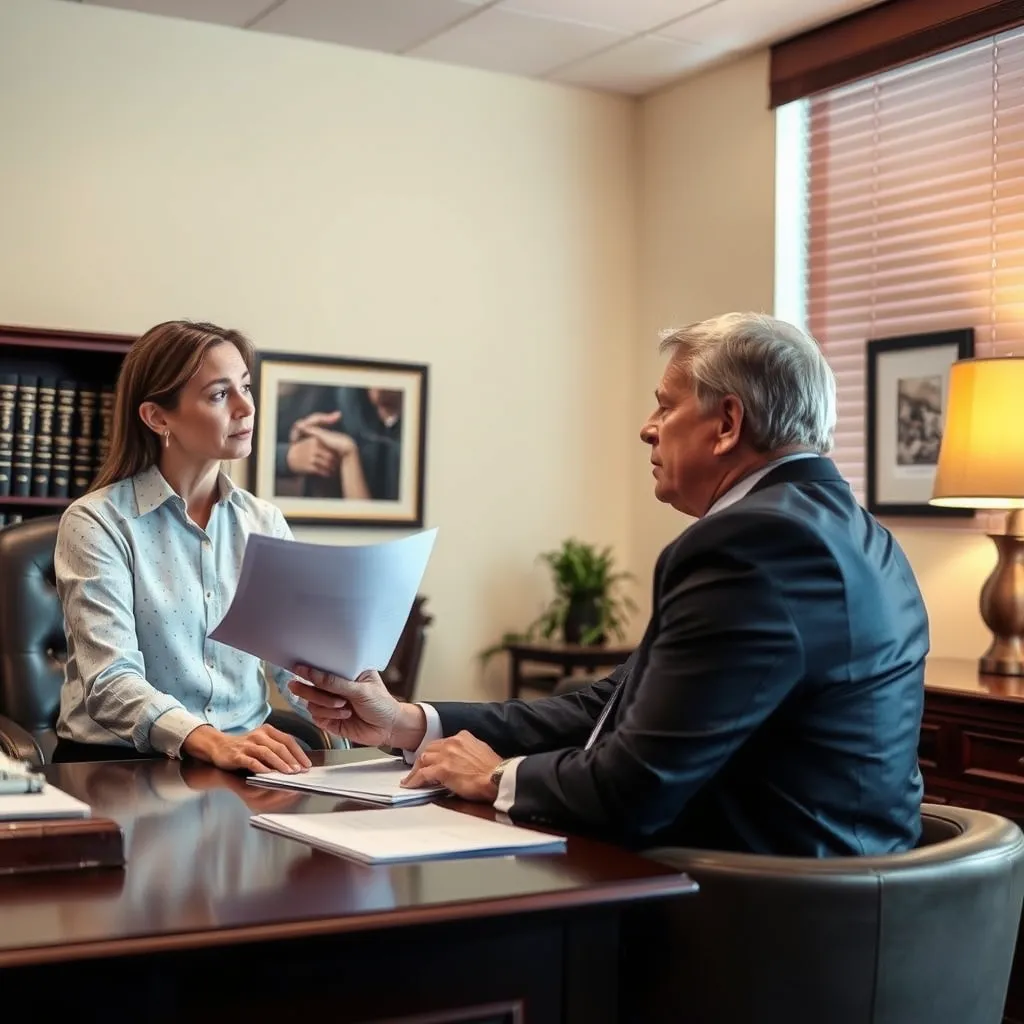
Out Of State Divorce Enforcement Lawyer Hampton, VA
When a divorce decree is entered by a court in one state but needs to be enforced in Virginia, the process can raise
practical and legal complications. In Hampton, enforcement of an out-of-state divorce decree typically requires
domesticating the foreign order in the Hampton Circuit Court so that it has the same force as a Virginia judgment.
Law Offices Of SRIS, P.C. represents clients in Hampton and the surrounding communities in out-of-state divorce
enforcement matters. Mr. Sris and his Of Counsel work to identify the most efficient path to enforce property
division, spousal support, custody, or child support provisions from a decree entered elsewhere. To discuss how an
out-of-state divorce decree can be enforced in Hampton, reach Law Offices Of SRIS, P.C. at (888) 437-7747.
Law Offices Of SRIS, P.C. – Advocacy Without Borders.
What Out-of-State Divorce Enforcement Means in Hampton, Virginia
Virginia courts give full faith and credit to valid divorce decrees issued by courts of other states under
28 U.S.C. § 1738, but enforcement does not happen automatically when the decree originates outside Virginia.
A party seeking to enforce a foreign divorce order in Hampton must first file a petition to domesticate the decree
with the Hampton Circuit Court. The Circuit Court, located at 236 North King Street, 2nd Floor, Hampton, VA 23669,
reviews the out-of-state decree to confirm that the issuing court had jurisdiction over the parties and the subject
matter. Once domesticated, the decree can be enforced through contempt proceedings, income withholding orders,
property liens, or other mechanisms available under Virginia law. Because Virginia is an equitable distribution
state, the court may need to address how property division or support provisions from a community-property or
non-equitable-distribution state translate into the Virginia framework.
For Hampton residents who obtained a divorce elsewhere or whose former spouse has moved out of Virginia, the
enforcement process often begins with an evaluation of the original decree alongside Virginia statutory requirements.
Common issues include modifying spousal or child support when the decree’s terms no longer fit current circumstances,
collecting arrearages that accrued while the parties were in different states, or ensuring that custody and
visitation provisions are honored across state lines. The Hampton Circuit Court handles divorce enforcement
proceedings, while the Hampton Juvenile and Domestic Relations District Court may address standalone custody
and support enforcement matters. Law Offices Of SRIS, P.C. helps clients navigate these parallel court paths
in Hampton, focusing on obtaining practical results without unnecessary procedural delay.
How Mr. Sris and His Of Counsel Handle Out-of-State Divorce Enforcement Cases
Mr. Sris and his Of Counsel begin an out-of-state divorce enforcement matter by reviewing the foreign decree,
the court records from the issuing state, and the client’s current circumstances. The team identifies whether the
decree can be directly domesticated under Virginia’s registration statutes or whether additional steps—such as
a motion to modify support or a contempt petition—are needed. In Hampton, the petition to domesticate is filed
in the Circuit Court, and the firm prepares the necessary affidavits and proposed orders. If the opposing party
raises jurisdictional or substantive challenges, Mr. Sris and his Of Counsel appear in Hampton courts to argue
on behalf of their client.
When support arrearages or property transfer provisions remain unfulfilled, the firm uses the tools Virginia
law provides: wage assignments, liens, show-cause hearings, and, where appropriate, contempt motions. Mr. Sris
and his Of Counsel also handle interstate custody enforcement through the Uniform Child Custody Jurisdiction and
Enforcement Act (UCCJEA) when custody or visitation orders from another state must be enforced in Virginia.
The process is approached with attention to the procedural requirements of both the issuing state and Virginia,
and every step is taken with the goal of securing a timely, enforceable result. Because each case involves
unique interstate legal questions, the firm tailors its strategy to the specific facts of the out-of-state
decree and the parties’ current locations.
About Mr. Sris and His Of Counsel Team
Mr. Sris, Owner and Founder of Law Offices Of SRIS, P.C., has represented clients in family law matters across
Virginia since 1997. As a former prosecutor, Mr. Sris brings insight into how legal disputes are framed and
argued in court. He testified before the Virginia House Courts of Justice Committee in support of 2019 HB 635
(chief patron Del. David Bulova). Mr. Sris is admitted to practice in Virginia, Maryland, the District of
Columbia, New Jersey, and New York. His Of Counsel team includes attorneys with additional family law and
litigation experience. Mr. Sris and his Of Counsel bring extensive combined legal experience. Results may vary.
The firm’s Richmond location serves clients in Hampton, the Hampton Roads region, and other parts of Virginia.
All consultations are by appointment, and the firm can be reached at (888) 437-7747. Mr. Sris and his Of Counsel
approach each out-of-state enforcement matter with a clear focus on the practical steps needed to turn a foreign
decree into an enforceable Virginia order.
Frequently Asked Questions
How do I enforce an out-of-state divorce decree in Hampton, Virginia?
You enforce an out-of-state divorce decree in Hampton by filing a petition to domesticate the decree with the Hampton Circuit Court.
Once the court enters an order recognizing and domesticating the foreign decree, you can use Virginia enforcement
tools such as income withholding, property liens, or contempt proceedings. The court will require proof that the
issuing state had proper jurisdiction over the parties and the subject matter. For guidance on starting the
domestication process, reach Law Offices Of SRIS, P.C. at (888) 437-7747.
Can a Virginia court modify spousal support from another state’s divorce decree?
A Virginia court can modify spousal support from an out-of-state decree if the decree is first domesticated in Virginia and the issuing state allows modification.
Virginia law applies to modification proceedings after domestication, but the court also considers whether the
original order is modifiable under the laws of the state that issued it. The party seeking modification must
show a material change in circumstances. Mr. Sris and his Of Counsel evaluate both the original decree and
current Virginia law to determine whether a modification petition is viable.
What if my former spouse lives in another state but the divorce decree is from Virginia?
If a Virginia divorce decree needs to be enforced against a party who now lives out of state, you may need to domesticate the Virginia decree in the state where the other party resides.
Hampton enforcement actions may still be possible if the obligor has assets, employment, or a license in
Virginia. Law Offices Of SRIS, P.C. works with clients to identify the most effective enforcement jurisdiction
and coordinates with counsel in other states when necessary. To discuss your specific situation, contact
the firm at (888) 437-7747.
How long does it take to enforce an out-of-state divorce decree in Hampton?
The timeline to enforce an out-of-state divorce decree in Hampton varies depending on whether the decree is uncontested and whether any objections are raised.
A straightforward domestication with no opposition can often be completed in a matter of weeks, while contested
enforcement—particularly when property division or support arrearages are disputed—can take longer.
The court’s calendar and the complexity of the interstate legal issues also affect timing. Mr. Sris and his
Of Counsel work to move enforcement proceedings forward efficiently.
Do I need a lawyer to enforce an out-of-state divorce decree in Virginia?
You are not legally required to hire a lawyer to enforce an out-of-state divorce decree in Virginia, but the process involves procedural rules and interstate jurisdictional nuances that can be challenging to navigate without legal guidance.
An attorney can help ensure the petition to domesticate is properly drafted, that the correct court is chosen,
and that any defenses raised by the opposing party are addressed. For a consultation about enforcing a foreign
divorce decree in Hampton, reach Law Offices Of SRIS, P.C. at (888) 437-7747.
Additional pages you may find helpful:
Divorce Lawyer in Hampton, VA |
Child Custody Lawyer in Hampton, VA |
Child Support Enforcement Lawyer in Hampton, VA |
Alimony Enforcement Lawyer in Hampton, VA |
Family Law Lawyer in Hampton, VA
Authoritative primary sources:
Hampton Circuit Court |
Virginia Code Title 20 (Domestic Relations)
Attorney advertising. Prior results do not guarantee a similar outcome.
Results may vary.
Case results depend on a variety of factors unique to each case.