
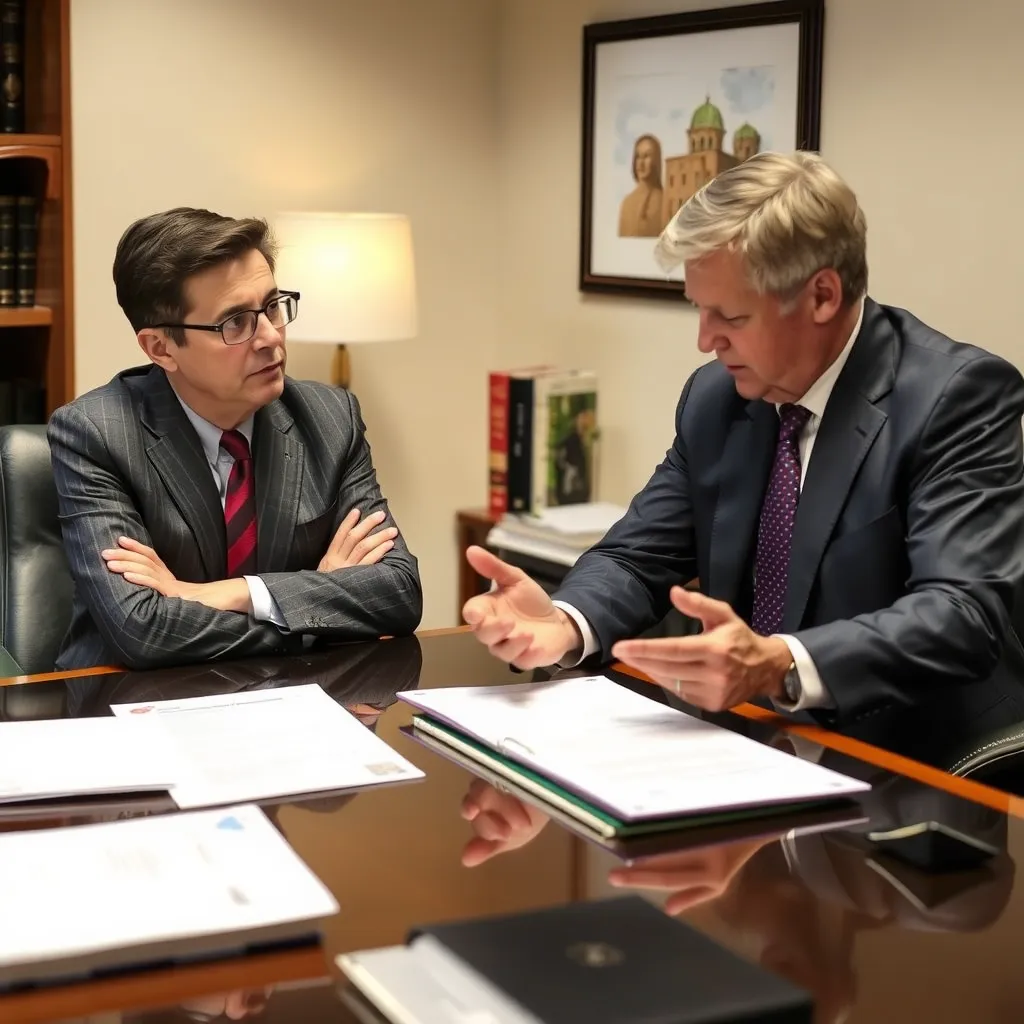
Spousal Support Lawyer Hampton, VA
Spousal support disputes—whether you are seeking financial assistance during or after a divorce or responding to a demand from a former spouse—require a clear understanding of how Hampton courts apply the statutory factors. In the City of Hampton, spousal support matters are heard in the Hampton Juvenile & Domestic Relations District Court, which handles support, custody, and protective orders, and the Hampton Circuit Court, which has exclusive original jurisdiction over divorce and equitable distribution. Law Offices Of SRIS, P.C., founded in 1997, provides experienced representation for individuals who need to establish, modify, or defend spousal support claims in Hampton. Mr. Sris and his Of Counsel team work to achieve favorable outcomes while respecting the financial and personal realities that these cases present. Contact us at (888) 437-7747 to arrange a consultation.
What Spousal Support Means in Hampton, Virginia
Spousal support—often called alimony—is governed in Virginia by Va. Code § 20-107.1, which directs the court to consider a non‑exhaustive list of thirteen factors. Those factors include the duration of the marriage, the standard of living established during the marriage, the age and physical and mental condition of each spouse, each spouse’s needs and earning capacities, the contributions of each spouse to the family’s well-being, and the property interests of the parties as determined by equitable distribution. In Hampton, the Juvenile & Domestic Relations District Court may enter temporary support orders while the divorce is pending, and the Circuit Court makes final determinations as part of a divorce decree.
Virginia is an equitable distribution state, meaning that property is classified and distributed fairly—not necessarily equally—before the court addresses support. The interplay between property distribution and spousal support can be complex: a larger share of marital assets may reduce the need for ongoing payments, while a smaller share may increase it. The Hampton courts apply these principles in cases that range from modest‑income marriages to complex marriages involving business interests, retirement accounts, and professional practices. Because each case is decided on its own facts, having counsel who understands how the statutory factors are weighted in the Hampton jurisdiction can make a meaningful difference.
How Mr. Sris and His Of Counsel Handle Spousal Support Cases
Mr. Sris and his Of Counsel team approach spousal support matters with a focus on thorough preparation and clear communication. The process typically begins with a detailed review of the financial circumstances of both spouses: income, earning capacity, reasonable living expenses, and any non‑marital resources that may affect the analysis. The team works to present the statutory factors in a way that reflects the client’s needs and the realities of the marriage, whether the goal is to obtain support that permits a reasonable transition to self‑sufficiency or to ensure that any support obligation is fair and sustainable.
In Hampton, uncontested support terms can be incorporated into a property settlement agreement and submitted to the court for approval, while contested matters proceed through discovery, negotiations, and—where necessary—a hearing before the judge. Throughout the process, Mr. Sris and his Of Counsel keep clients informed about the procedural status of their case and the practical implications of various settlement options. The team also handles enforcement and modification proceedings when a support order already exists but circumstances have changed materially for either party. Because the financial and legal landscape can shift after a divorce, we encourage clients to seek guidance before unilaterally stopping, reducing, or increasing support payments.
About Mr. Sris and His Of Counsel Team
Mr. Sris, Owner and Founder of Law Offices Of SRIS, P.C., has practiced in Virginia since 1997. A former prosecutor, he brings a practical, results‑oriented approach to family‑law disputes. Mr. Sris testified before the Virginia House Courts of Justice Committee in support of 2019 HB 635 (chief patron Del. David Bulova), a bill that refined the procedures for equitable distribution of retirement assets. His practice spans five jurisdictions—Virginia, Maryland, the District of Columbia, New Jersey, and New York—and he personally leads the spousal support and family‑law work in the Hampton area through the firm’s Richmond location.
Mr. Sris and his Of Counsel bring extensive combined legal experience to family‑law matters. Results may vary. Every case is handled with attention to the specific financial and personal dynamics at play, and clients can expect straightforward advice about the strengths and challenges of their position. For a consultation, reach Law Offices Of SRIS, P.C. at (888) 437-7747.
Frequently Asked Questions
What factors does the court consider when determining spousal support in Virginia?
A Virginia court considers thirteen statutory factors, including the duration of the marriage, each spouse’s earning capacity and financial needs, the standard of living during the marriage, the age and health of each party, and the contributions each made to the family’s welfare. The court also examines the property interests each spouse receives through equitable distribution, because a larger share of marital property may reduce the need for ongoing support. No single factor is dispositive, and the weight given to each factor can vary depending on the specifics of the case. For guidance on how these factors might apply to your situation, call (888) 437-7747.
How is spousal support different from child support in Hampton?
Spousal support is financial assistance from one former spouse to the other, while child support is money paid for the care and upbringing of a child. The two obligations are calculated using different legal standards: spousal support is based on the statutory factors in Va. Code § 20-107.1, while child support is determined by applying the Virginia Child Support Guidelines to the parties’ combined gross income. In Hampton, both types of support can be addressed in the same proceeding, but they remain separate obligations with separate enforcement mechanisms. Contact our firm to discuss how the two might interact in your case.
Can a spousal support order be modified after a divorce in Virginia?
Yes, a spousal support order may be modified if the party seeking the modification demonstrates a material change in circumstances that was not contemplated at the time of the original order. Common examples include a substantial increase or decrease in either party’s income, involuntary job loss, or a change in health that affects earning capacity. Modifications are not automatic; the court retains discretion to adjust the amount or duration of support based on the current facts. An attorney can help present the evidence needed to support a modification request in the Hampton Circuit Court.
How long does spousal support last in Virginia?
Spousal support may be ordered for a defined rehabilitative period—long enough for the recipient to become self‑supporting—or, in some cases, indefinitely. Rehabilitative support is common when the recipient spouse needs time to complete education or job training. Indefinite support may be appropriate when the marriage was long‑term and one spouse is unlikely to re‑enter the workforce due to age, disability, or health concerns. The court can also reserve the right to set support at a later date rather than immediately awarding or denying it. For a fuller analysis of the duration that might apply to your circumstances, contact Law Offices Of SRIS, P.C.
Do I need a lawyer to pursue or defend against a spousal support claim in Hampton?
You are not legally required to have a lawyer to seek or oppose spousal support, but the statutory factors and the interplay with equitable distribution make these hearings fact‑intensive and procedure‑oriented. An experienced attorney can help organize the financial evidence, calculate realistic support ranges, and present the statutory factors in a way that aligns with Hampton court practice. Representing yourself requires familiarity with the Virginia Rules of Evidence, local procedural rules, and the deadlines for filing motions and responsive pleadings. For a consultation with Mr. Sris, call (888) 437-7747.
What should I bring to a consultation about spousal support?
You should bring any documents that reflect the finances of both spouses: recent pay stubs, tax returns for the last two to three years, bank and investment account statements, a list of monthly living expenses, and any existing support orders or separation agreements. If you own a business, bring financial statements and, if possible, a schedule of monthly draws or distributions. The more complete the financial picture, the more accurately an attorney can evaluate the likely range of support and the options for settlement or litigation. To schedule a consultation, reach Law Offices Of SRIS, P.C. at (888) 437-7747.
Our firm also serves clients in the surrounding Hampton Roads area. Learn more about spousal support services in these nearby communities: Spousal Support Lawyer in Norfolk, Virginia Beach Spousal Support Attorney, Portsmouth Spousal Support Representation, Newport News Spousal Support Counsel.
For additional statutory background, review the Virginia Code § 20-107.1 (spousal support factors) and the Hampton Circuit Court website for current court information.
Attorney advertising. Prior results do not guarantee a similar outcome.
Results may vary.
Case results depend on a variety of factors unique to each case.